State-owned Bharat Petroleum Corporation Ltd (BPCL) is willing to dilute a 30-40 per cent stake in its upcoming greenfield refinery in Andhra Pradesh, with Gulf energy major Saudi Aramco and upstream player Oil India Ltd (OIL) likely to join as partners, a senior BPCL executive said.
Oil India has discovered natural gas reserves off the Andaman Islands, the state-owned firm said without putting an estimate of the size of the find. In a statement, OIL said "occurrence of natural gas" was reported in the second exploratory well Vijayapuram-2 drilled in the Offshore Andaman Block AN-OSHP-2018/1, which the company had won under the Open Acreage Licensing Policy (OALP).

'Both initiatives are welcome moves and we would commit ourselves with focused attention aligned with the national priorities, and pursue our exploration initiatives.'
India on Tuesday opened its largest oil and gas bid round, offering 25 blocks covering 1.91 lakh square kilometers mostly in offshore area, as the government looks to boost domestic production to cut imports and help energy security. Petroleum Minister Hardeep Singh Puri launched the 10th bid round under the Open Acreage Licensing Policy (OALP) at the India Energy Week (IEW) in Mumbai.

The government on Monday scrapped 30-month old windfall profit tax on domestically-produced crude oil and on export of jet fuel (ATF), diesel and petrol following a decline in international oil prices. Minister of State for Finance Pankaj Chaudhary tabled a notification in Rajya Sabha scrapping the levy on crude oil produced by firms like state-owned Oil and Natural Gas Corporation (ONGC) and exports of fuels done by companies like Reliance Industries Ltd.
India's biggest oil and gas bid round attracted four bidders that included state-owned ONGC and OIL and private sector Vedanta Ltd, with most blocks getting just two bids, according to Directorate General of Hydrocarbons (DGH). The OALP-IX bid round, where 28 blocks or areas spread over 1.36 lakh square kilometre were offered for finding and producing oil and gas, for the first time saw Reliance Industries Ltd-bp plc combine bidding together with ONGC for one block in Gujarat offshore.

As much as 8 billion rubles (about Rs 1,000 crore) of dividend income belonging to Indian oil firms is stuck in Russia after the Putin administration clamped down on dollar repatriation, officials said on Friday. Indian state oil firms have invested $5.46 billion in buying stakes in four different assets in Russia. These include a 49.9 per cent stake in Vankorneft oil and gas field and another 29.9 per cent in TAAS-Yuryakh Neftegazodobycha fields.

Russian energy giant Rosneft has appointed a former Indian Oil Corporation (IOC) director to its board in signs it may be looking at boosting trade links with India. G K Satish, who retired as director for business development at IOC in 2021, is one of the three new faces appointed to the 11-strong board of directors of Rosneft, according to a statement issued by the Russian firm. Satish, 62, is the first Indian to be appointed to the board of Rosneft.
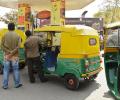
The Union Cabinet on Thursday approved a revision in the formula for pricing of natural gas and imposed cap or ceiling price to help cut CNG and piped cooking gas prices by up to 10 per cent. Natural gas produced from legacy or old fields, known as APM gas, will now be indexed to the price of imported crude oil instead of benchmarking it to gas prices in four surplus nations such as the US, Canada and Russia, Union I&B Miniser Anurag Thakur told reporters after a meeting of the Cabinet. APM gas will be priced at 10 per cent of the price of basket of crude oil that India imports (Indian basket of crude oil).
Prices of natural gas, which is used to generate electricity, make fertiliser and is converted into CNG to run automobiles, were on Friday hiked by a steep 40 per cent to record levels, in step with global firming up of energy rates. The rate paid for gas produced from old fields, which make up for about two-thirds of all gas produced in the country, was hiked to $8.57 per million British thermal units from the current $6.1, according to an order from the oil ministry's Petroleum Planning and Analysis Cell (PPAC). Simultaneously, the price of gas from difficult and newer fields like the ones in Reliance Industries Ltd and its partner bp plc operated deepsea D6 block in KG basin, was hiked to $12.6 per mmBtu from $9.92, the order said.
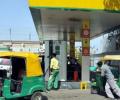
Prices of natural gas, which is used to generate electricity, make fertiliser and is converted into CNG to run automobiles, is likely to rise to record levels at the rate review scheduled this week, sources said. The government-dictated price for natural gas produced in the country is to be revised on October 1. After factoring in the spike in energy prices witnessed in recent months, the rate paid for gas produced from old fields such as of state-owned Oil and Natural Gas Corporation (ONGC) is likely to rise to $9 per million British thermal units from current $6.1.
India's top oil and gas producer ONGC on Friday reported a tripling of net profit in the June quarter as it earned record prices before the government slapped a tax on windfall profits arising from a global rally in energy rates. Oil and Natural Gas Corporation's (ONGC) standalone net profit at Rs 15,205.85 crore, or Rs 12.09 per share, in April-June, compared to Rs 4,334.75 crore, or Rs 3.45 a share, in the same period a year back, according to a stock exchange filing by the company. Sequentially, the profit was higher than the Rs 8,859.54 crore net profit of January-March.

Privatisation-bound Bharat Petroleum Corporation Ltd (BPCL) on Monday said it will exit Numaligarh refinery in Assam by selling its entire stake to a consortium of Oil India Ltd and Engineers India Ltd for Rs 9,876 crore. The sale of Numaligarh Refinery Ltd clears the way for privatisation of India's second-largest fuel retailer. In keeping with the Assam Peace Accord, the government had decided to keep Numaligarh Refinery Ltd (NRL) in the public sector. As part of this, BPCL was to sell its entire 61.65 per cent stake to state-owned firms.

India's crude oil production fell 2.15 per cent in October as state-owned firms produced less but, natural gas output rose by a quarter on the back of output from KG-D6 fields of Reliance-BP, government data released on Tuesday showed. Crude oil production dropped to 2.51 million tonnes in October, as output from fields operated by Oil and Natural Gas Corp (ONGC) and Oil India Ltd (OIL) dipped. While ONGC produced 4 per cent less crude oil at 1.64 million tonnes, OIL output dropped 1.46 per cent to 2,53,000 tonnes.
India's production of crude oil, which is refined to produce petrol and diesel, continued to decline in November, with lower output from state-owned firms leading to an over 2 per cent drop, official data released on Tuesday showed. Crude oil production in November was 2.43 million tonnes, down from 2.48 million tonnes a year back and 2.5 million tonnes in October 2021. Oil and Natural Gas Corporation (ONGC) produced 3 per cent less crude oil at 1.6 million tonnes in November due to delays in mobilising equipment at western offshore fields.

State-owned oil firms such as ONGC and IOC will invest over Rs 1.11 lakh crore in the next fiscal year starting April as they supplement the government's massive spending programme to spur economic growth. Oil and Natural Gas Corporation (ONGC), Indian Oil Corporation (IOC), GAIL (India) Ltd, Bharat Petroleum Corporation Ltd (BPCL), Hindustan Petroleum Corporation Ltd (HPCL) and Oil India Ltd (OIL) will together make a 7.4 per cent higher capital expenditure in the 2022-23 fiscal (FY23). The capex spending of Rs 1.11 lakh crore in 2022-23 compares with a revised estimate of Rs 1.04 lakh crore for the current fiscal year that ends in March, according to Union budget documents.
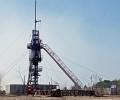
The worst industrial disaster of the Northeast took away the lives of three employees of the PSU major and injured several others.
The 62 per cent increase in natural gas prices by the Indian government will boost the profitability of upstream companies in the country and support their investment spending, Fitch Ratings said on Tuesday. The price for gas from fields that were assigned by the state to oil companies, mainly Oil and Natural Gas Corporation (ONGC) and Oil India Ltd (OIL), increased to $2.90 per million British thermal units (mmBtu) for October 2021-March 2022, from $1.79 per mmBtu in the previous six months. "Higher gas prices will increase the input cost for key end-consumer sectors, to the extent the price hike is passed on," Fitch said.
CNG and piped cooking gas prices in cities such as Delhi and Mumbai may be hiked by 10-11 per cent next month as the government-dictated gas price is set to rise by about 76 per cent, ICICI Securities said in a report. The government, using rates prevalent in gas-surplus nations, fixes the price of natural gas produced by firms such as state-owned Oil and Natural Gas Corp (ONGC) from fields given to them on nomination basis, every six months. The next review is due on October 1.
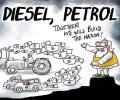
The government on Friday slapped an export tax on petrol, diesel and jet fuel (ATF) while also joining nations like the UK in imposing a windfall tax on crude oil produced locally. A Rs 6 per litre tax on export of petrol and ATF and Rs 13 per litre tax on export of diesel is effective from July 1, finance ministry notifications showed. Additionally, a Rs 23,250 per tonne tax was levied on crude oil produced domestically.

Ajit Mishra, vice president, Research, Religare Broking, answers your queries.

The government on Monday fixed the issue price of the share at Rs 1,050 per share, raising about Rs 4,982 crore (Rs 49.82 billion). The public issue of OIL, which closed on September 10, was subscribed nearly 31 times, generating demand for shares worth over Rs 85,576 crore (Rs 855.76 billion).

The state-run Oil India Ltd has raised a war chest $1.5 to 2 billion and is eying acquisition of small to medium sized oil producing companies overseas.
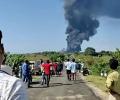
The two firefighters had gone missing after the well caught fire on Tuesday and their bodies were recovered by a National Disaster Relief Force team on Wednesday morning, said Oil India Spokesperson Tridiv Hazarika.
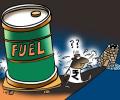
The windfall tax on oil produced within India and fuel exported overseas will make up for more than three-fourths of the revenue that the government lost when it cut excise duty on petrol and diesel to cool soaring inflation, industry sources said. India on July 1 joined a select league of nations globally that have taxed windfall gains accruing to oil companies from soaring energy prices. The government slapped a Rs 6 per litre tax on the export of petrol and jet fuel (ATF) and Rs 13 a litre on the export of diesel effective July 1. Additionally, a Rs 23,250 per tonne tax was levied on crude oil produced domestically.

The government on Thursday more than doubled the price of natural gas that is used to produce electricity, make fertilisers, turned into CNG and piped to household kitchens for cooking, on the back of a spike in global energy prices. The price of gas produced from old regulated fields, such as the nation's largest gas field of Bassein of ONGC, will rise to a record high of $6.10 per million British thermal unit (mmBtu) from the current $2.90 per mmBtu, according to the oil ministry's Petroleum Planning and Analysis Cell (PPAC). The new price, which is likely to result in a hike in CNG and piped cooking gas rates, will be for six months beginning April 1.

India's latest bid round for 21 oil and gas blocks attracted just three bidders, two of whom were state-owned explorers Oil and Natural Gas Corp (ONGC) and Oil India Ltd (OIL), according to upstream regulator DGH. As many as 21 blocks or areas were offered for exploration and production of oil and gas in the Open Acreage Licensing Policy (OALP) Bid Round-VI, for which bidding closed on October 6. Besides ONGC and OIL, Sun Petrochemicals was the only other company to have bid, according to 'Summary of Bids Received Against Offered Blocks' posted by the Directorate General of Hydrocarbons (DGH).

At the same time, the Cabinet approved reducing government's stake in select PSUs such as IOC to below 51 per cent while continuing to retain management control.

IIT Roorkee has so far seen the highest domestic salary rise Rs 80 lakh, up by a third from Rs 60 lakh last year.

ONGC Videsh Ltd and its partners Indian Oil Corporation and Oil India Ltd had in 2009 dropped plans to develop the Binaloud oil find in the Farsi offshore block as it found one billion barrels of reserves commercially unviable.

The asset it owned by Venugopal Dhoot and a US oil and gas explorer.

The duo closes in on the stake put on the block by Videocon, US' Anadarko.

As it gets ready for disinvestment of 10 per cent government equity through the offer-of-sale route in January, T K Ananth Kumar, director (finance), tells Jyoti Mukul the company is one of the cheapest explorers and producers of oil and gas, but awaits more predictability in the government-subsidy sharing mechanism.
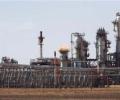
Appoints Foster Wheeler as consultant to prepare project report.

Govt was selling 60.11 mn shares, or 10% co's stock, had set a floor price of Rs 510/share for bids.

India's move to raise the price of subsidised diesel should help with its plans to sell shares in state companies, including Oil India Ltd, to help bridge the government's fiscal deficit and gives a boost to private oil refiners looking to enter the market for bulk diesel sales.
The government on Thursday hiked by 62 per cent the price of natural gas that is used to produce electricity, make fertilisers and turned into CNG to use as fuel in automobiles and cooking gas for household kitchens. This is the first increase in rates since April 2019 and comes on back of firming benchmark international prices but does not reflect the spurt in spot or current price of liquefied natural gas (LNG) witnessed during the last couple of weeks. The oil ministry's Petroleum Planning and Analysis Cell (PPAC) said the rates paid for gas produced from fields given to state-owned Oil and Natural Gas Corporation (ONGC) and Oil India Ltd (OIL) will be $2.90 per million British thermal unit for the six-month period beginning April 1.
The government on Friday approved sale of its minority stakes in four public sector firms -- Hindustan Copper, Oil India, MMTC and Nalco-- to raise up to Rs 15,000 crore.

The Houston-based company is selling up to 50 per cent of its oil-sand reserves in Alberta. There are some producing assets and some exploration assets on offer.
